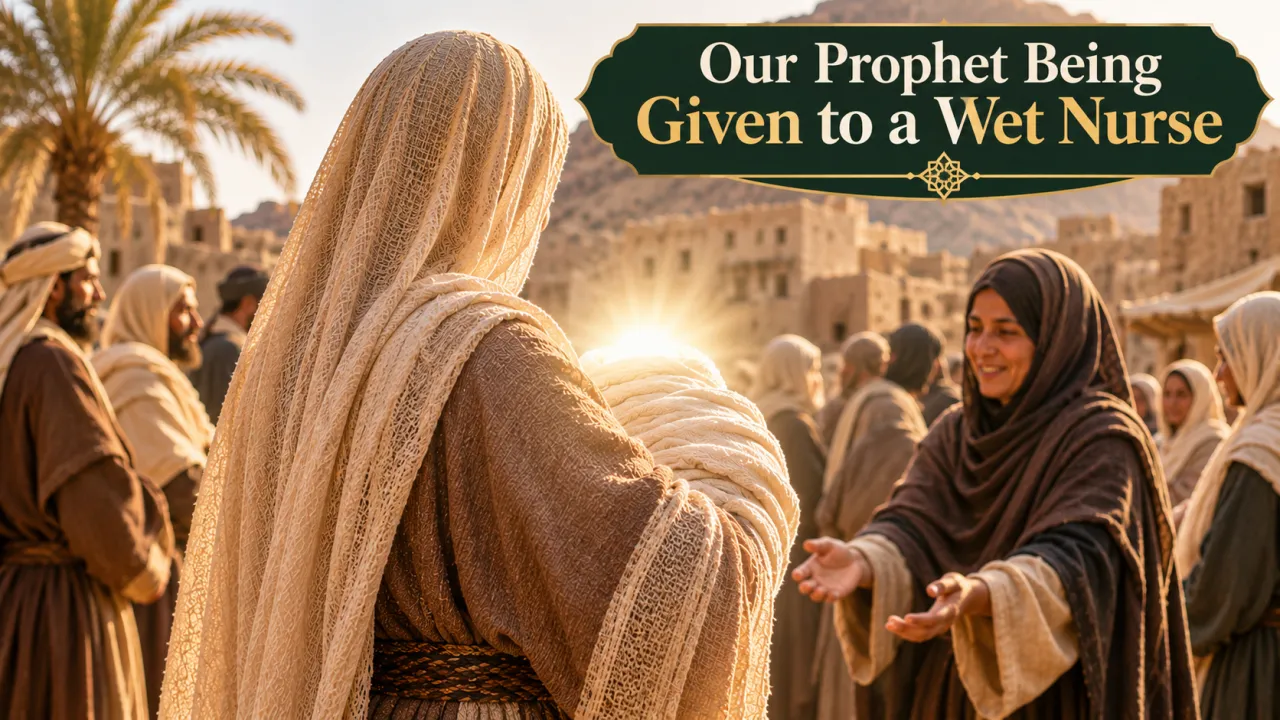
Our Prophet Being Given to a Wet Nurse
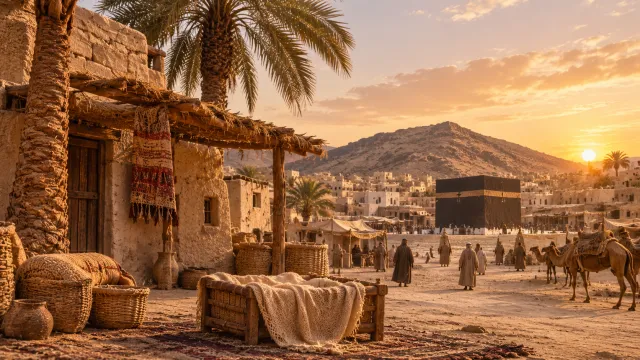
Our Prophet being given to a wet nurse is one of the most frequently asked-about topics in the sira. Muhammad (pbuh) was born in Mecca, but he spent the first years of his childhood in the desert, with Halima. So how did this happen, and what took place there? Let's talk through it one step at a time, as if we were chatting.
Why Was Our Prophet Given to a Wet Nurse?
This was a very common custom in Mecca at that time. The crowds and diseases of the city were not considered very healthy for babies. So Qurayshi families would send their children, at nursing age, to the desert tribes around the city.
There were three reasons for this: clean air, a strong constitution and eloquent Arabic. Desert tribes spoke their language without corrupting it, so the child would grow up sturdy and also learn to speak beautifully. In other words, sending our Prophet to the desert was an ordinary and well-known practice.
Who Nursed Our Prophet First?
There are a few names before Halima. First his mother Amina nursed him for a short time. Then Thuwayba, the freed slave woman of Abu Lahab, nursed him for a few days. Hamza (may Allah be pleased with him) had also been nursed by Thuwayba, so he became a foster brother of our Prophet. But the role of main wet nurse was granted to Halima.
Who Is Halima, and How Did She Take Our Prophet?
Halima bint Abi Dhu'ayb belonged to the Banu Sa'd branch of the Hawazin tribe. With her husband Harith, she had come to Mecca in a year of severe famine to take a foster child.
Why Did No One Want to Take an Orphan?
Wet nurses were given a fee and gifts in those days, and it was the child's father who paid them. Because Muhammad's father Abdullah had died before his birth, the women who came held back, saying "orphan." No one wanted this child.
Why Did Halima Choose This Child?
It is told that Halima could not find any baby in the caravan to be given to her. She did not want to return empty-handed and said something like this to her husband: "I would not like to go back empty-handed in front of my friends; let me go and take that orphan." Her husband did not object. According to the narration, when Halima took him in her arms, she felt a strange calm inside.
What Happened in Halima's Home?
The sira books give quite a lot of detail about these years. Some of it rests on Halima's own account, so it should be read as a "narration."
Narrations of Blessing
The donkey Halima rode on the journey was weak, and her old camel was giving no milk. Her own son was crying from hunger. According to the narration, when little Muhammad was taken into her arms, Halima's milk increased, and both her own son and Muhammad were fed. On the way back, the same donkey moved to the front of the caravan. At home too, the milk of the sheep and goats increased, and theirs was the family least affected by the famine.
Who Were His Foster Siblings?
Our Prophet grew up in Halima's home with Abdullah, Unaysa and Shayma. Shayma is remembered as the foster sister who showed him the most attention. The children grazed the sheep together and played in the desert.
Language and Upbringing in Banu Sa'd
Desert life gave him a sturdy body and beautiful Arabic. According to a narration, our Prophet later said: "I am the most eloquent of you Arabs, because I am from Quraysh and I was nursed among Banu Sa'd."
Who Was His Foster Father?
His foster father was Halima's husband, Harith. That this couple, who lived off sheep and camels, took our Prophet into their home in a year of famine is told as a turning point for the family. In other words, little Muhammad was welcomed lovingly in the desert by a foster mother, a foster father and a large foster family.
When Did Our Prophet Leave His Wet Nurse?
According to the custom of the time, babies were weaned at the age of two. Halima also brought the child to Mecca, to his mother, at that age. But Halima did not want to part with him. Citing her worry about the epidemic in Mecca and the blessing the child had brought, she asked Amina for permission. When Amina agreed, our Prophet returned to Banu Sa'd.
What Is Shaqq al-Sadr, and What Happened at the Wet Nurse's Home?
The most important event of this period took place here. According to the narration of Anas (may Allah be pleased with him) in Sahih Muslim, while our Prophet was playing with the children, Gabriel (peace be upon him) came. He laid him on the ground, opened his chest and took out his heart. He separated a clot from his heart and said, "This is the share of Satan in you." Then he washed the heart in a golden basin with Zamzam water and put it back in its place.
The children ran to the wet nurse in fear and shouted, "Muhammad has been killed!" When they all went to him together, our Prophet was perfectly fine, but his color had turned pale. Anas (may Allah be pleased with him) later says that he saw the mark of the stitching on his chest.
How Many Years Did Our Prophet Stay With His Wet Nurse?
There are small differences among the sources on this. The first return was at the age of two; then our Prophet was sent back to the desert, and after the event of Shaqq al-Sadr he was brought to Mecca for good. Some narrations say four years in total, others five. In short, our Prophet spent the first years of his childhood in Banu Sa'd. These years gave him both a sturdy body and an eloquent tongue.
When Did Halima Bring Our Prophet Back to Mecca?
After this event Halima was very frightened and worried that harm might come to the child. She handed him over to his mother in Mecca. The sources differ on how old our Prophet was at that time. Most narrations point to around four or five. But the main outline is the same: after the years he spent in the desert, our Prophet returned to Mecca, to his mother Amina.